
When Emma and I joined Westbury Golf Club, neither of us knew how important it would become in our golfing lives.
For Emma, it was her first golf club and the place where she would learn the game.
For me, it represented something completely different. I have been a Member at several different clubs over the years, as well as playing amateur tours and belonging to some large golf societies
Most of last few years has been as a visitor or a society member, where I travelled around Wiltshire and the surrounding counties playing courses including Bowood, The Manor House, Orchardleigh, The Kendleshire, Cumberwell Park and Wrag Barn, but through all those years and courses I never really felt as though I had a golfing home
Westbury changed that for a while.
Instead of planning a day around golf, I suddenly had a course five minutes from home where I could play nine holes after work, enter competitions, practise, meet other golfers and become part of a club. Looking back through my England Golf records, the biggest change wasn’t my handicap. It was simply how much more golf I played.
During our time at Westbury I have submitted well over a hundred scores there, become involved in different parts of club life, worked alongside PGA Professional Chris Tyson, became his regular caddy when he plays in the South West PGA Professional competitions and, somewhat unexpectedly, became Westbury Scratch Champion.
Emma learned to play golf there, we made friends there, and Westbury became an important part of our lives.
Yet the time had also come for us to move on.
That doesn’t mean something went wrong at Westbury. In fact, I think the opposite is closer to the truth.
Westbury was the right golf club for us when we joined. Two and a half years of membership have simply helped us understand more clearly what we wanted from the next stage of our golf.
Why We Joined Westbury Golf Club
The reasons we joined were actually quite simple.
Emma was starting golf and needed somewhere she could learn without feeling intimidated. Like many beginners, she needed a club where nobody expected her to arrive already understanding handicaps, competitions and all the unwritten parts of club golf. She needed somewhere she could learn at her own pace and gradually become comfortable on a golf course.
I was looking for something different.
I was already an established golfer, but I wanted somewhere practical. I wanted a course close to home, affordable to join and easy to fit around everyday life. Being able to play nine holes after work appealed to me more than driving across the county every time I wanted to play.
Westbury fitted those requirements extremely well.
The atmosphere was very friendly, the club was approachable and there wasn’t the feeling that we were trying to gain admission to some exclusive institution. We were joining somewhere people went to play golf and have a good time
Looking back now, I think Westbury was exactly the right club for us at that stage.
That’s important because it would be easy to look at our decision to leave and assume joining Westbury was somehow the wrong choice. It wasn’t.
If I could go back two and a half years knowing everything I know now, I would still join.
Emma Learned to Play Golf at Westbury
Emma’s experience probably demonstrates Westbury’s strengths better than mine.
She arrived as a complete beginner and gradually learned how to play, entered competitions, met other golfers and became comfortable calling herself a golfer.
Golf can be intimidating when you’re starting. There is an enormous amount that experienced golfers take for granted, from etiquette and rules to handicaps and simply knowing where you’re supposed to stand while somebody else is playing.
My experience of Westbury is that it handles that side of golf particularly well.
It is fundamentally an accessible community club. People are encouraged to play, participate and improve rather than feel as though they have to reach a certain standard before they belong.
Had we joined somewhere more intimidating, I don’t know whether Emma’s experience would have been as positive.
For that alone, Westbury was a very good choice for us.
Westbury Turned Me From a Visitor Into a Club Golfer
The biggest change in my own golf was the amount I played.
Before joining Westbury, playing golf usually meant travelling somewhere. I would book a course, drive there, play and come home. I enjoyed playing different courses and still do, but golf was something I arranged rather than something that naturally fitted into everyday life.
Membership changed that almost immediately.
Nine holes after work became normal. If the weather looked good one evening, I could simply go and play. Practising became easier and competitions required far less planning.
When I looked back through my England Golf records while thinking about this article, I initially expected to find a story about improvement. I thought I might see a simple pattern where I joined a club, played more golf and watched my handicap fall.
That isn’t really what happened.
I already had plenty of good scores from courses such as Kendleshire, Bowood, Manor House, Orchardleigh and Wrag Barn before I joined Westbury. Membership didn’t suddenly turn me into a better golfer.
What Westbury gave me was more golf, and I think that was ultimately more important.
Becoming Part of a Golf Club
There is also a big difference between regularly playing somewhere and actually becoming part of a club.
Westbury gave me that experience for the first time.
For a while I took on the role of Junior Organiser and quickly discovered how much work goes on behind the scenes. Unfortunately, due to my own workload, I couldn’t give the role the time it deserved, but it left me with much more appreciation for the volunteers who keep a community golf club running and I did enjoy working with the Juniors, there are a couple there that could become really good players.
I also spent a considerable amount of time working alongside Chris Tyson on coaching and golf-related projects. Chris helped me with my own short game, and I now caddie for him in PGA Club Pro competitions.
Those relationships wouldn’t have existed in the same way if I had continued turning up at different golf courses as a visitor.
As a visitor, I tended to judge a golf club by the course.
As a member, I learned to judge it by the people as well.
That is why leaving is more complicated than simply deciding that I would rather play somewhere else.
What Westbury Golf Club Is Like to Play
Westbury is a nine-hole parkland course played as 18 using different tee positions on the two loops. From the white tees the complete round is relatively short by modern standards at around 5,700 yards and plays to a par of 70.
Those numbers explain some of its accessibility, but they don’t really explain what the course becomes when you play it repeatedly.
On a first visit, Westbury can look like a short, approachable course that is easy to walk and gives golfers plenty of opportunities to score. Those characteristics are part of what made it work so well for us when we joined.
After playing the course so many times, however, I naturally started looking at it differently.
I became less interested in whether a hole offered me a birdie opportunity and more interested in what decision it was asking me to make.
Some holes continued to hold my attention much more than others.
Why the 6th Is My Favourite Hole at Westbury
The 6th is probably my favourite example of how Westbury’s two-loop format can create different golf from the same piece of ground.
On the first nine it is a short par 4 that I can reach from the tee, while on the second loop the same area becomes a par 3 of around 200 yards.
I prefer the par 3. It’s the hole I always fancied making birdie on.
The driveable par 4 probably gives me the better opportunity to make birdie, but the longer par 3 asks a clearer question. I have to choose the right club, make a committed swing and hit a quality shot.
That is increasingly the type of golf I enjoy.
A hole doesn’t have to be long or brutally difficult to interest me. I just want it to make the quality of the shot matter.
The 7th Still Makes Me Think
The 7th is another hole I have come to appreciate through repeated play.
There is a ditch running down the left, and a straight drive of around 230-240 yards can bring it into play, as the fairway moves gently to the right and that makes the tee shot more interesting than the scorecard might initially suggest.
I can take on the more direct route and accept the danger, or play more conservatively and potentially leave myself a less straightforward approach.
I like holes that make me make a decision before I swing.
My own course-management philosophy has increasingly become pick conservative targets but be aggressive in execution, and holes like the 7th give me an opportunity to put that into practice.
The difficulty isn’t simply hitting the golf ball.
It is deciding where I actually want to hit it.
The 8th Is More Interesting Than It Looks
The 8th is probably the hole I think visitors could most easily underestimate.
It is a short par 3 and doesn’t look particularly intimidating on the scorecard, but much of the interest is in the green. The putting surface has enough movement that position matters more than the length of the hole initially suggests.
That appeals to me because putting is one of the strongest parts of my game and I enjoy golf courses where the green continues asking questions after the approach shot has finished.
It also leads into one of the areas where my own preferences gradually moved away from what Westbury offers.
Why Green Speed Became More Important to Me
Westbury’s greens tend to be slower than I prefer.
That isn’t the same thing as saying they are poor greens, and another golfer may prefer exactly the slower pace that I don’t.
For me, though, putting has always been one of the strongest parts of my game. I particularly enjoy very fast, undulating greens where reading break and controlling pace become a significant part of scoring.
The 8th demonstrates why. I like the contours that are already there, but my preference is to play those sorts of greens with more pace because it makes positioning and pace control more influential.
Over time that became increasingly important to me, not because Westbury had changed but because I had become clearer about the type of golf course I enjoy most.
That distinction runs through most of this article.
The course wasn’t becoming worse.
I was learning more about what suits me.
A Shorter Golf Course Didn’t Automatically Mean a Lower Handicap
My England Golf records also taught me something about the relationship between course difficulty and handicap.
It is tempting to assume that playing a shorter course regularly should make reducing a handicap easier.
That wasn’t necessarily my experience.
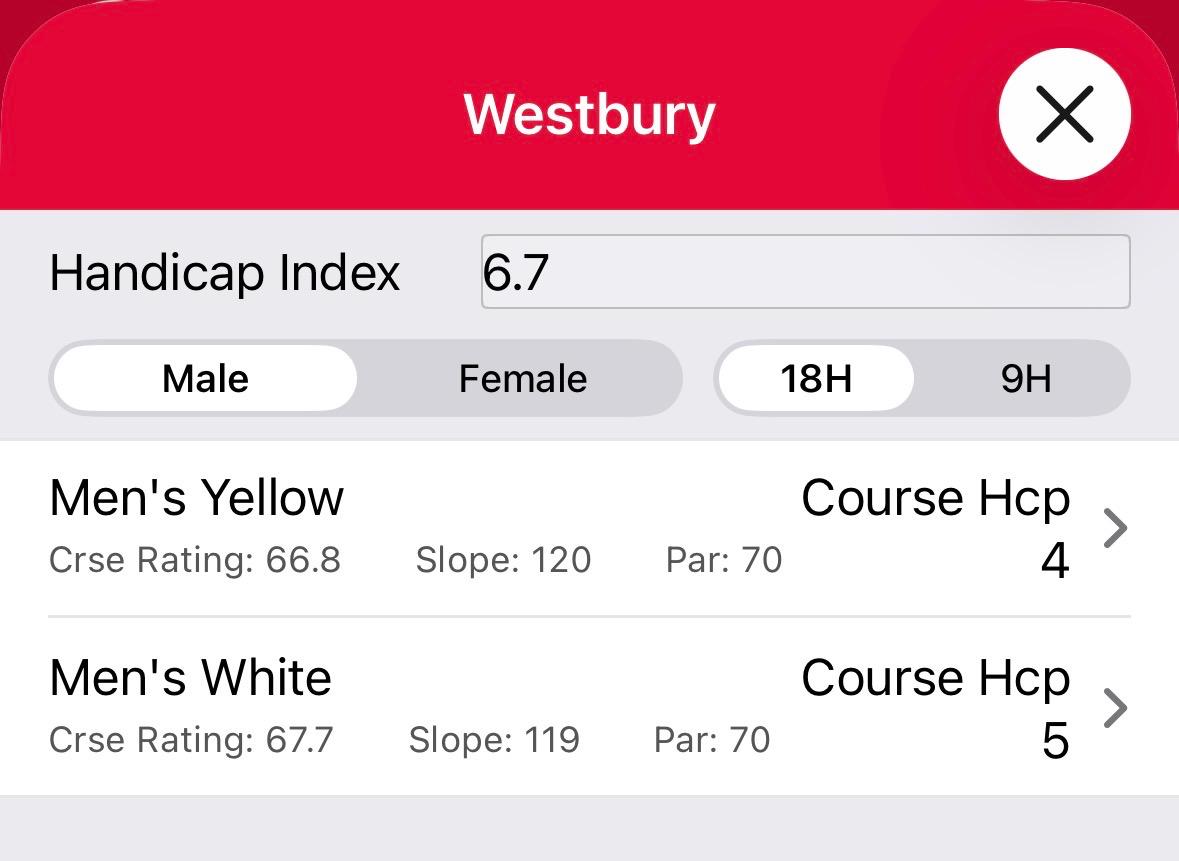
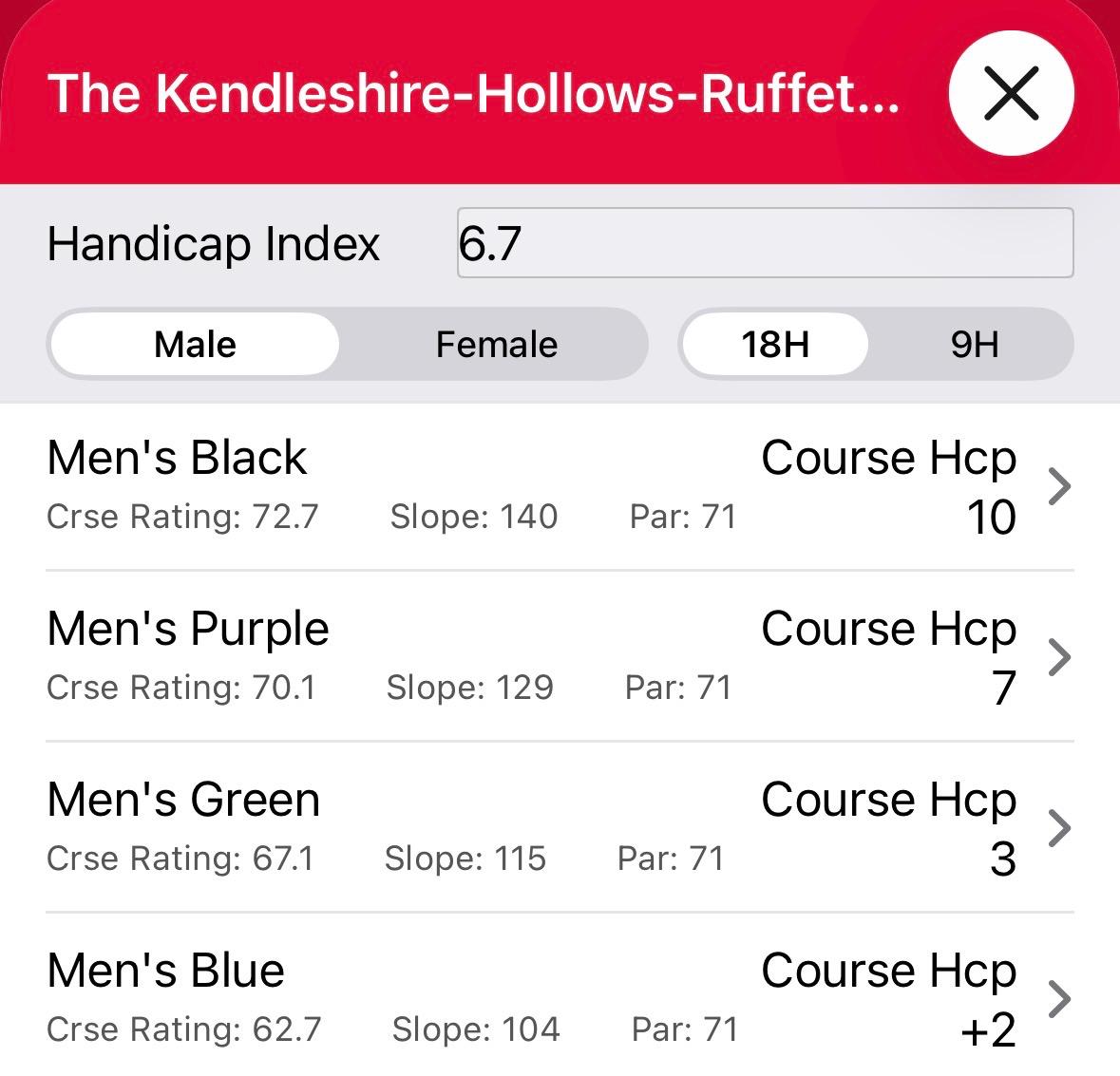
I played a lot of nine-hole golf at Westbury and could walk off having played what I considered very solid golf, perhaps one or two over par, without necessarily producing the sort of differential I expected.
At the same time, I have produced strong differentials on longer courses that might appear considerably more difficult on paper.
The Kendleshire is a good example. If my only objective were producing a low handicap differential, there are circumstances where I would actually fancy my chances more from the back tees there than at Westbury.
That sounds slightly backwards, but golf courses suit different golfers.
The type of greens, the demands on approach shots, the shape of the holes and the places where a course asks you to make decisions all interact with the strengths and weaknesses of your own game.
A shorter course isn’t automatically an easier course for every golfer.
That was useful for me to understand.
Becoming Westbury Scratch Champion
One of the stranger parts of my time at Westbury is that I became Scratch Champion at around the same period that I was becoming increasingly certain I wanted a different golfing challenge.
I am pleased to have won it.
The experience also helped clarify what I was looking for next.
Westbury is primarily a community golf club, and its competition programme understandably reflects the golfers who make up its membership. Handicap competitions allow golfers of very different abilities to compete together, and for the majority of club golfers that is one of the great strengths of the handicap system.
Over time, my own competitive interests have moved slightly elsewhere.
I have become less interested in individual handicap competitions and more interested in scratch golf, matchplay, pairs golf and team events. I enjoy competition where I know what is happening in front of me on the golf course and where the decisions I make during the round directly affect the contest.
Becoming Scratch Champion didn’t make Westbury’s approach wrong.
It simply made me think more seriously about what I wanted from competition.
If winning the main scratch title at the club didn’t remove my desire to look elsewhere, then perhaps I wasn’t really looking for another trophy.
I was looking for a different type of challenge.
The Course Didn’t Change, I Did
That is probably the simplest way I can explain our decision.
Westbury hasn’t suddenly become a different golf club.
The things that made it attractive when we joined are largely still there. It is close to home, affordable, friendly and easy to fit around everyday life. It remains an approachable place to play golf and, based on Emma’s experience, somewhere I would be perfectly comfortable recommending to somebody who is finding their way into the game.
What changed was us.
Emma is no longer the golfer who arrived needing somewhere to learn what club membership was like.
I’m no longer looking primarily for the convenience of having somewhere five minutes away where I can play nine holes after work.
After playing so much golf at Westbury, I have become clearer about what I enjoy. I like fast greens, I want a stronger challenge from the course and I would like more opportunities to play with and against golfers around my own level. I’m also increasingly drawn towards scratch golf, matchplay, pairs and team formats.
None of those preferences makes Westbury worse.
They simply make other clubs increasingly interesting to me.
Why We’re Moving On From Westbury Golf Club
People sometimes assume that leaving a golf club must mean something has gone wrong.
That isn’t really what happened here.
There was no single incident that made us decide to leave, and I don’t think there needs to be one.
When we joined, Emma needed a welcoming place to learn golf and I wanted somewhere close to home where I could play regularly and become part of a club rather than always being a visitor.
Westbury delivered both.
It gave Emma a start in golf that I don’t think we could reasonably have asked to be much better. It gave me a golfing home after years of travelling around playing as a visitor, and it gave us friends and relationships that won’t disappear simply because our membership changes.
It introduced me properly to the community side of golf clubs, gave me opportunities to become involved and eventually gave me a Scratch Championship as well.
The practical argument for staying is still strong. Westbury is close, convenient and relatively affordable, while moving elsewhere inevitably means compromises of its own.
But choosing a golf club isn’t purely a practical decision.
The more golf we played, the clearer our preferences became. Eventually there comes a point where staying somewhere because it is convenient isn’t quite enough reason to stay.
The Right Golf Club at the Right Time
The biggest thing I have learned from two and a half years at Westbury is that there probably isn’t one golf club that is automatically right for every stage of a golfer’s life.
What matters when you first start playing may be completely different from what matters several years later, and even an experienced golfer can change.
Courses change too, as do memberships, competition programmes and the people you play with, but none of those things needs to go wrong before it becomes reasonable to look for something different.
Westbury gave Emma and me exactly what we needed when we joined.
Emma learned golf there. I became a club golfer there. We played an enormous amount of golf, became part of a community and learned more clearly what we both want from the game.
I don’t regard leaving as evidence that Westbury failed us.
In many respects, I think it demonstrates how well the membership worked.
We arrived looking for one thing and left knowing considerably more about the golfers we have become.
Westbury was the right club for us.
It is simply time for the next one.