
Please note: We’re currently transferring our original golf coaching videos to YouTube. The lessons listed below will become available as they’re uploaded. All coaching is free to watch, with no registration required.
A golf shank is one of those shots that can make even a fairly confident golfer suddenly question everything they’re doing.
One minute you’re hitting the ball reasonably well. The next, you’ve struck one off the hosel and sent it shooting off to the right.
And once you’ve hit one, there’s always that little thought in the back of your mind that another might be coming.
For a right-handed golfer, a shank usually happens when the ball makes contact with the hosel of the club rather than the centre of the clubface, sending it sharply to the right.
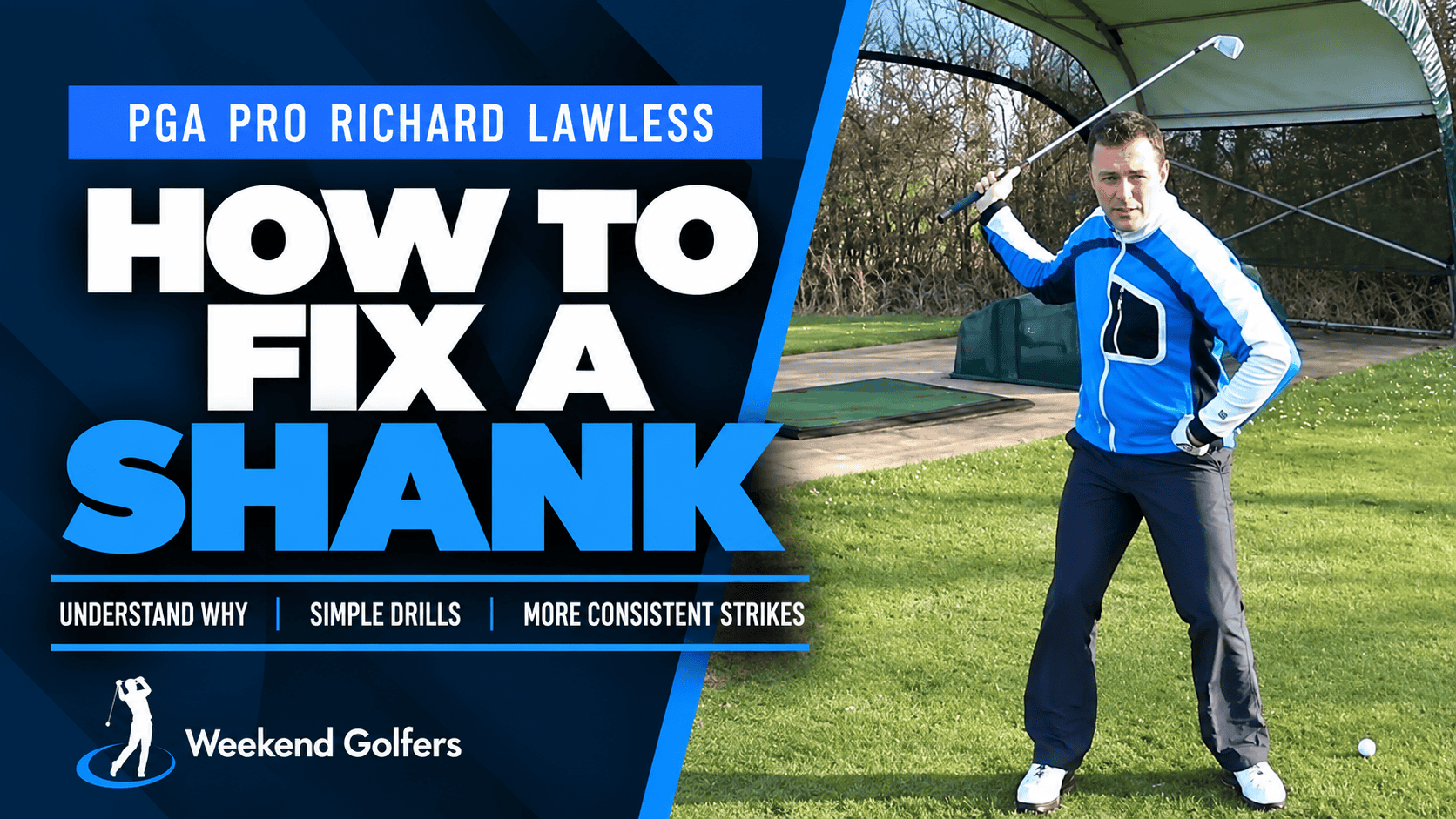
In this coaching course, PGA Professional Richard Lawless looks at what causes a golf shank and demonstrates 13 practical drills designed to help you understand and correct the movements that can lead to one.
The lessons cover different aspects of the swing, including club delivery, body movement, balance and developing a better awareness of where the club is travelling.
Not every drill will suit every golfer. Some focus on your setup and movement, while others are designed to help you develop a different feeling during the swing.
The idea is to give you several options so you can find an approach that helps you make more consistent contact.
You can work through the lessons in order or return to individual drills whenever your shank starts causing problems again.


What Causes a Golf Shank?
Before you can fix a shank, it helps to understand why it happens.
In this lesson, Rich explains how a shank occurs when the ball strikes the hosel rather than the clubface. He looks at some of the swing movements that can cause this unwanted contact and explains what golfers should look out for.

The Balls Under Your Feet Drill
This drill uses an adjustment to your setup to help you become more aware of your balance and the position of your body during the swing.
Rich demonstrates how changing the relationship between your feet and the ground can influence the way you deliver the club.
The Clearing The Hips Drill
The movement of your hips during the downswing can influence the space available for your arms and club.
Rich looks at how clearing your hips can help you develop a different movement through impact and improve your ability to strike the ball consistently.
The Heel In The Air Drill
This drill explores how your foot position and balance can affect your movement during the swing.
Rich demonstrates an adjustment designed to help you become more aware of how your body moves towards and through impact.
The Heel of The Club Drill
Understanding where the clubface makes contact with the ball is an important part of correcting a shank.
Rich uses this drill to help you recognise the position of the heel of the club and develop greater awareness of your strike location.
The Bumping Your Hips Drill
This lesson looks at the movement of your hips during the golf swing.
Rich demonstrates how adjusting that movement can influence the delivery of the club and help you work towards more consistent contact.
The One Arm Drill
Using one arm during a practice swing can help you concentrate on the movement of the club without the usual feeling of a full two-handed swing.
Rich demonstrates how this exercise can be used to explore club delivery and improve awareness of your swing.
The Pump Drill
The Pump Drill involves rehearsing part of the downswing before completing the movement.
Rich uses this exercise to help you develop a better feeling for how the club approaches the ball.
The Awareness Ratings Drill
Sometimes improving your swing begins with recognising what you’re actually doing.
Rich introduces an awareness exercise designed to help you assess your movements and develop a clearer understanding of the changes you’re trying to make.
The Visualisation Drill
Visualising a movement or shot can be a useful part of practising golf.
Rich explores how mental rehearsal can help you focus on the movement you’re trying to produce rather than worrying about hitting another shank.
The One Plane Swing Drill
This drill explores the relationship between the backswing and downswing and how the club moves through the swing.
Rich demonstrates an approach designed to encourage a more consistent movement and club delivery.
Shoulders & Hips In Sync Drill
The way your shoulders and hips move together can influence your swing.
Rich looks at coordinating these movements to help you develop a more controlled and repeatable action.
The Breathing Drill
A shank can affect your confidence, particularly when you’re worried about hitting another one.
Rich introduces a breathing exercise designed to help you settle yourself and approach the next shot with a clearer mind.
The Balance Drill
Maintaining your balance throughout the swing can help you control how your body and club move.
Rich demonstrates a drill designed to improve awareness of your balance and support more consistent ball striking.
Finding the Right Drill for Your Shank
There isn’t necessarily one solution that works for every golfer.
The important thing is to understand what’s causing your particular problem and find a drill that helps you improve your contact.
Try the different exercises, concentrate on the movements that make sense to you and give yourself time to practise them.
And if you’ve recently hit a shank or two, don’t assume your entire golf swing has suddenly disappeared.
Sometimes a small adjustment is all that’s needed to start making better contact again.