
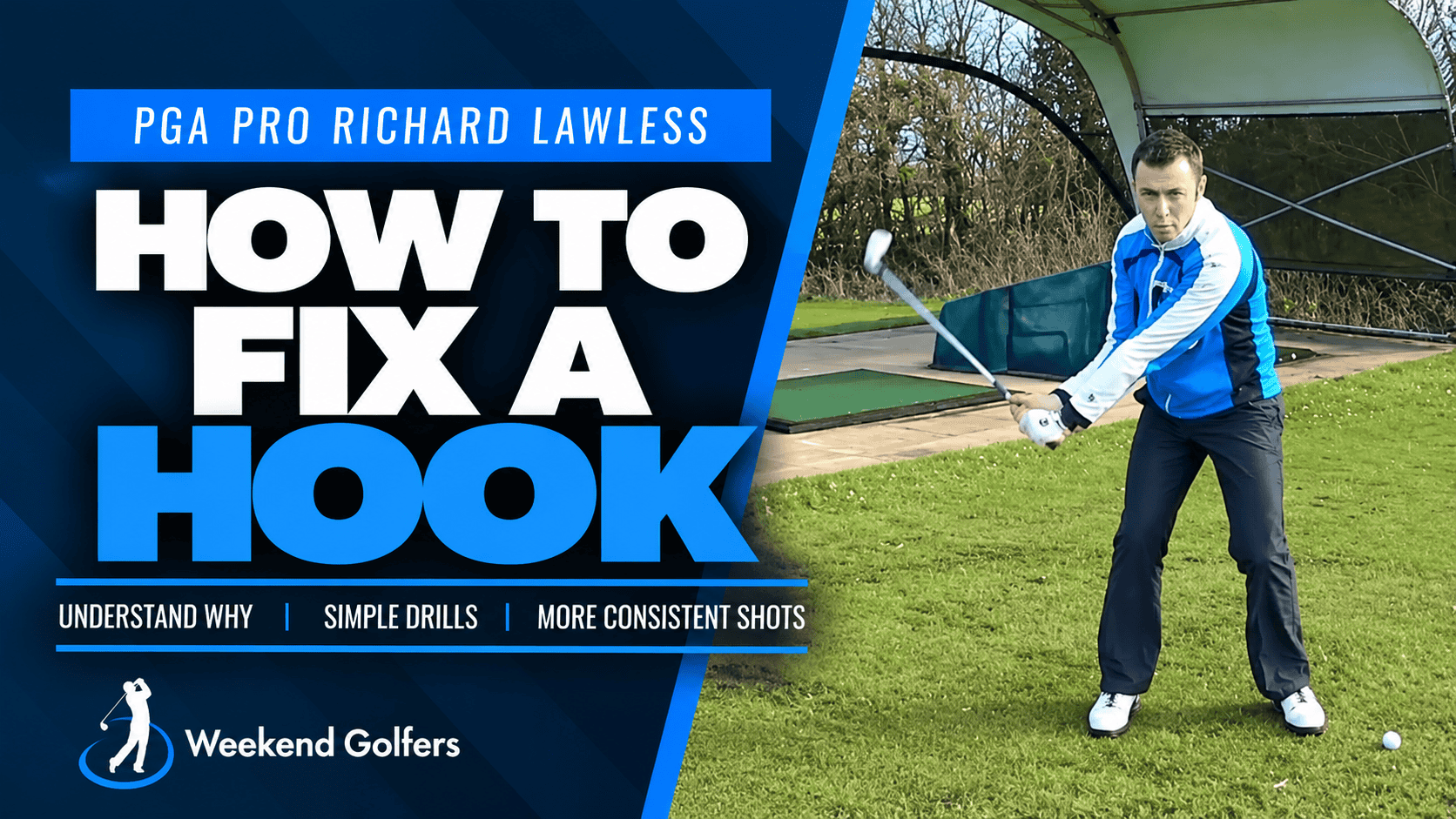
Why Do You Hook the Golf Ball?
A golf hook can be frustrating, particularly when you’re struggling to control how far the ball curves and where it finishes.
For a right-handed golfer, a hook is a shot that curves sharply from right to left. For a left-handed golfer, the direction is reversed.
There are several reasons why a golfer might hook the ball, and understanding what’s happening during your swing is an important part of finding a solution.
In this coaching course, PGA Professional Richard Lawless demonstrates six practical drills designed to help you understand and work on the movements that can contribute to a hook.
The lessons look at how your hands, clubface, swing path and body rotation influence the direction of your shots.
Each drill approaches the problem differently. Some focus on the movement of your hands and club, while others use changes to your stance or body rotation to help you develop a different feeling through the swing.
You don’t need to practise all six drills at once. Try the ones that seem relevant to your own swing and see which help you produce a more controlled ball flight.
Introduction to How to Fix a Golf Hook
PGA Professional Richard Lawless introduces the course and explains how different aspects of your golf swing can contribute to a hook.
Rich outlines the six practical drills covered in the lessons, each offering a different approach to improving clubface control and reducing unwanted right-to-left ball flight.


The Split Grip Drill
Using a split grip changes how your hands work during the swing and can help you develop a different feeling for controlling the clubface.
The drill may feel unusual at first, but it’s another way to explore the movements that influence a hook.

The Faster Body Rotation Drill
Rich looks at how continuing to rotate your body through impact can influence the way the club is delivered to the ball.
The aim is to reduce excessive right-to-left curvature by changing how your body and club move through the hitting area.

The Knuckles Up Drill
This drill focuses on the position of your hands and clubface through impact.
Rich demonstrates how keeping your knuckles pointing upwards can help you develop a different feeling for controlling the clubface and reducing excessive closure.

The Toe Behind The Heel Drill
Understanding how the clubhead rotates through the swing can help you recognise why the ball hooks.
Rich uses this drill to explore the relationship between the toe and heel of the club and how that movement influences clubface control.
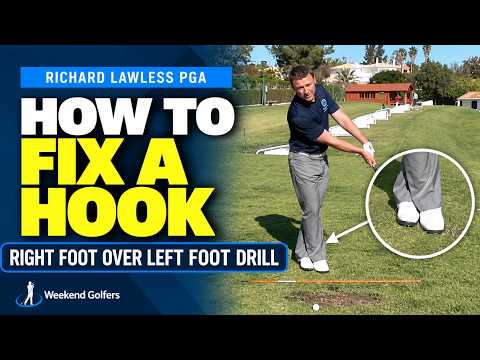
The Right Foot Over Left Foot Drill
This drill uses a change in your stance to influence body movement during the swing.
Rich demonstrates how the altered foot position can help you develop a different feeling for delivering the club and controlling your ball flight.

The Baseball Swing Drill
Rich uses a baseball-style swing to help you experience a different clubface position and release through the swing.
The exercise is intended to help you develop a feeling for keeping the clubface more open rather than allowing it to close excessively.
Finding the Right Drill for Your Hook
Not every drill will suit every golfer.
The important thing is to understand what you’re trying to change and find a movement that helps you control your ball flight more consistently.
Work through the drills, practise the ones that make sense to you and return to individual lessons whenever your hook starts causing problems again.