
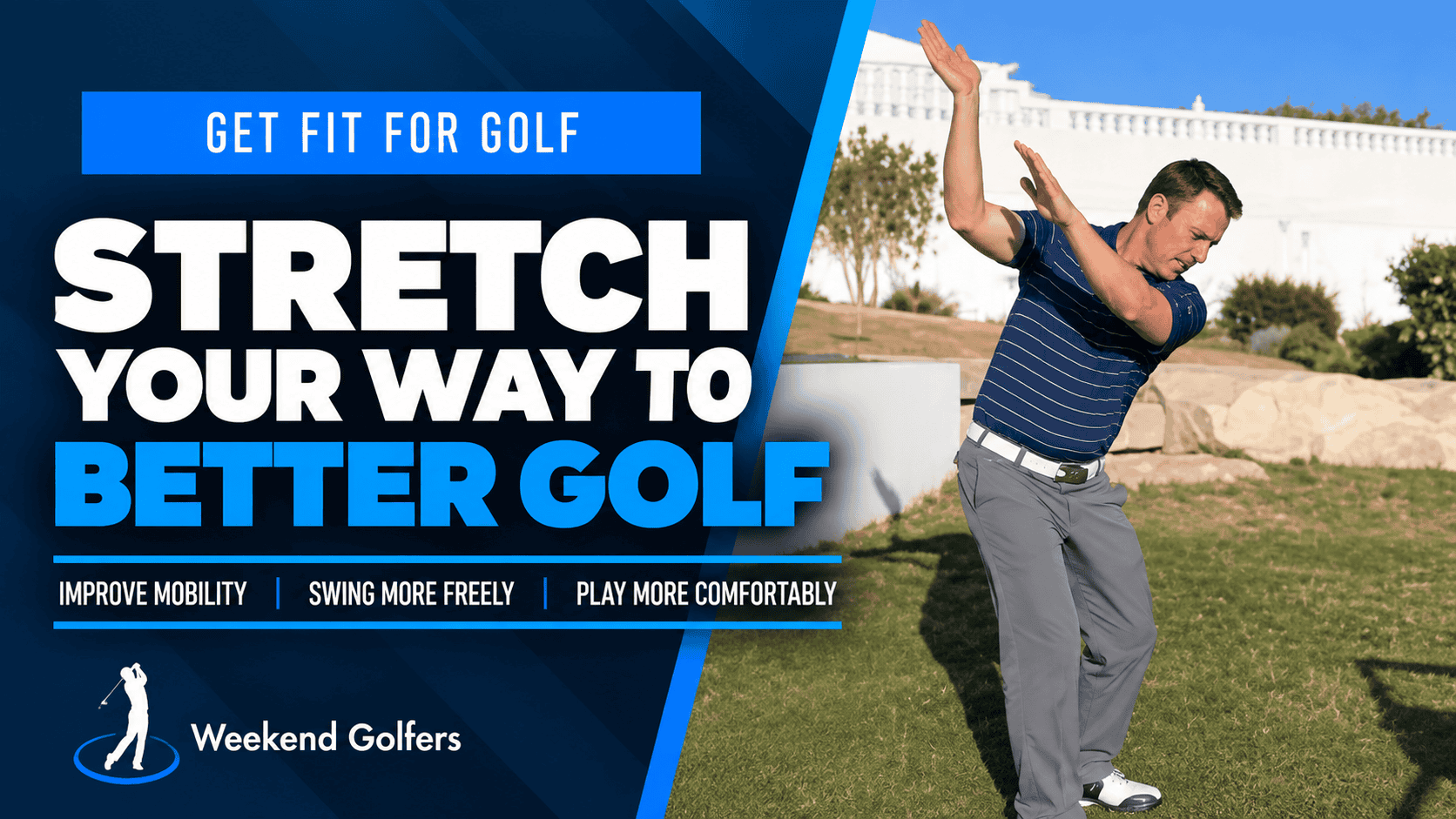
11 Golf Stretches for Flexibility and Mobility
Golf involves plenty of twisting, turning and bending, often using muscles that don’t get much attention during everyday activities.
And if you’ve ever stepped onto the first tee feeling a little stiff, you’ll know that getting your body moving comfortably isn’t always as straightforward as we’d like.
In this course, we look at 11 static stretches covering different muscle groups involved in playing golf.
The stretches focus on areas such as the shoulders, back, hips, legs and neck, with the aim of supporting flexibility, mobility and comfortable movement.
The course covers stretches for the whole body, including the triceps, thighs, obliques, rotator cuff, forearms, neck, hamstrings, glutes, chest and calves.
You don’t need to follow the videos in a particular order. You can work through the complete collection or return to individual stretches whenever there’s an area you’d like to focus on.
The important thing is to move gently, avoid forcing a stretch and work within a comfortable range of motion.
These are general stretching exercises rather than a personalised fitness or rehabilitation programme. If you have an injury or a medical condition that affects movement, seek appropriate professional advice before trying them.
The aim is simply to give you a collection of practical stretches that you can use alongside your golf practice and playing.
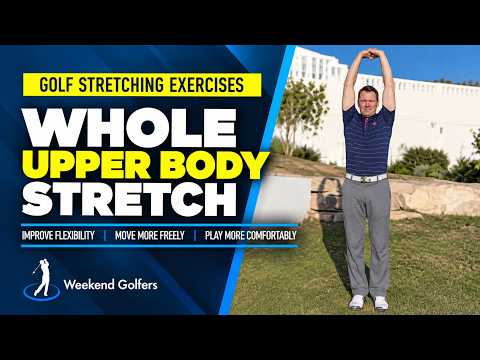
Whole Upper Body Stretch
This stretch works along the length of the upper body, encouraging you to extend upwards and loosen areas that can become stiff through everyday activity.
Rich demonstrates how to stretch through the upper body, helping you become more comfortable with the movements involved in turning and extending during the golf swing.

Tricep Muscles Stretch
The triceps are located at the back of your upper arms and help control movement at the elbow.
Rich demonstrates a stretch targeting these muscles, which can become tight through repetitive activity. Maintaining comfortable flexibility through the arms can help support freer movement during the golf swing.

Quadriceps (Thigh Muscle) Stretch
The quadriceps are the large muscles at the front of your thighs. Tightness in this area can influence the position of your pelvis and make it more difficult to establish a comfortable golf posture.
Rich explains why golfers should pay attention to both the quadriceps and hamstrings. Concentrating on stretching one while neglecting the other may contribute to differences in flexibility that affect pelvic tilt.
This exercise focuses on the front of the thighs, helping you work towards more balanced lower-body flexibility.

The Side Stretch
It’s quite common to find that one side of your upper body is more flexible than the other.
Rich demonstrates a side stretch that helps you explore those differences and work on flexibility along both sides of your torso.
This is particularly relevant to golf, where your body needs to turn and clear through the swing. Improving comfortable movement on both sides can help you rotate without unnecessary restriction.

Rotator Cuff Stretch
The rotator cuff consists of muscles and tendons that help stabilise the shoulder joint and control its movement.
Rich demonstrates a stretch targeting this area, which can be difficult to stretch effectively.
Shoulder mobility is important when making a backswing and rotating through the ball. Because rotator cuff injuries can take a long time to recover from, it’s worth treating these muscles with care.
Perform the exercise gently, without forcing the shoulder into uncomfortable positions. Stop if you experience pain.
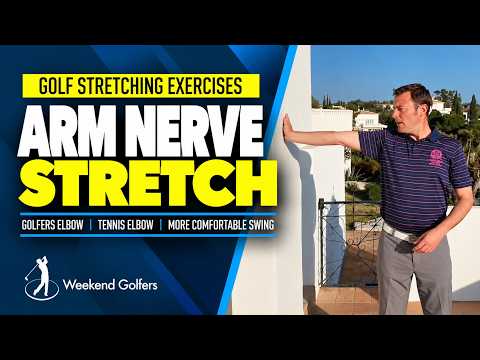
Arm Nerve Stretch
This exercise is a little different from the other stretches in the course because it focuses on movement involving the nerves running along the arm.
Rich demonstrates the exercise and discusses its relevance to golfer’s elbow and tennis elbow, which can cause discomfort around the inside and outside of the elbow.
The aim is to explore gentle movement along the arm rather than force a deep muscular stretch.
Nerve mobilisation isn’t suitable for every elbow problem. If you have an existing injury, pain, tingling or numbness, seek professional advice before attempting the exercise.
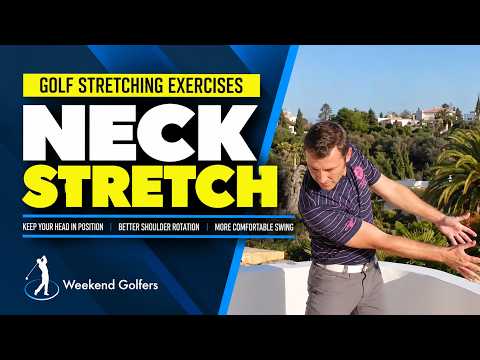
The Neck Stretch
Your shoulders need to rotate during the golf swing while your head remains relatively steady. If your neck feels stiff or restricted, that movement can become uncomfortable.
Rich demonstrates a gentle neck stretch designed to maintain mobility and reduce unnecessary tension.
The aim isn’t to keep your head completely fixed during the swing, but to allow comfortable movement through the neck and shoulders as your body rotates.

The Hamstring Stretch
The hamstrings run along the back of your thighs and influence movement around the hips and pelvis.
Tightness in these muscles can make bending forward into your golf posture feel restricted.
Rich demonstrates a hamstring stretch designed to maintain flexibility through the back of the legs.
As explained in the quadriceps lesson, it’s worth working on both the front and back of your thighs rather than concentrating on one muscle group.

The Glutes Stretch
Your gluteal muscles play an important role in supporting your hips, maintaining stability and controlling movement during the golf swing.
Rich demonstrates a supported glute stretch designed to improve comfortable movement around the hips.
Flexibility in this area can help you rotate more freely, clear your hips through impact and maintain your posture as you swing the club.

Chest Muscle Stretch
Many of us spend hours sitting at desks or driving, often with our shoulders rounded forwards.
Over time, tightness through the chest can make it harder to adopt a comfortable upper-body posture.
Rich demonstrates a stretch targeting the pectoral muscles at the front of the chest, helping to open up the shoulders.
This can be useful when setting up to the golf ball and allowing your upper body to rotate during the backswing and follow-through.
As with all the exercises in this course, stretch gently and avoid forcing the movement.

Calf Muscles Stretch
Walking a golf course places repeated demands on your calf muscles, particularly when you’re playing on hilly ground.
Rich demonstrates a calf stretch designed to ease built-up tension and maintain comfortable movement through the lower legs and ankles.
Flexible calf muscles can support everyday walking and balance, making this a useful exercise to include in a general stretching routine.
Making Stretching Part of Your Golf Routine
You don’t need to work through all 11 stretches every time you practise or play.
The idea is to recognise which areas of your body feel restricted and develop a routine that helps you move more comfortably.
You might find that your shoulders need attention after a day at your desk, or that your hips and legs feel particularly stiff after walking the course.
These exercises give you a collection to return to whenever you want to work on your flexibility.
Stretch gently, listen to your body and avoid forcing movements that cause discomfort.
The aim isn’t to become a gymnast. It’s simply to make moving around the golf course and swinging a club a little more comfortable.